

Blockchain can solve a lot of issues continually faced by banks and financial organizations nowadays. It could bring changes to everything from payments to online appointment scheduling software. It provides a high level of security in storing and transforming data at low costs through an open and transparent network infrastructure. The traditionally centralized, conservative, and restricted banking sector has now started using blockchain technology more than any other institutions. The change of the bank's clearinghouse or centralized ledger to blockchain's distributed ledger could redefine the banking industry.

For blockchain technology to achieve wide-scale adoption, a decentralised ecosystem has to be developed. To achieve a decentralised society, many more components need to be built, requiring global standards and large investments. Apart from the different industry layers that need to be developed, we will also continue to see new distributed ledger technologies and more exciting decentralised applications. With the blockchain ecosystem evolving, new applications and technologies come into play as well. Therefore, here are five blockchain trends that you should consider in the coming year.
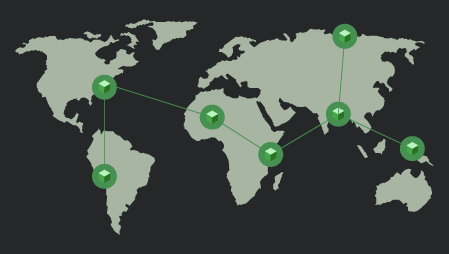

Predictive analytics, as an evolving domain based on Big Data and AI, requires a considerable amount of information for training the model. Sometimes, locally, this is scarce or unscalable, but imagine putting together data from thousands of similar users. Suddenly, the lack of data is no longer a problem and patterns emerge more easily. This gives a real chance to smaller companies, like start-ups, to take advantage of the blockchain model for their operations and use the data generated in the process as a by-product to feed various prediction models.